
2026 New England Power Grid
Supply and demand resources help meet New England’s electricity needs, and state policies are transforming the resource mix.
Region Has Many Proposals for New Supply
Electric generating capacity by state (MW)
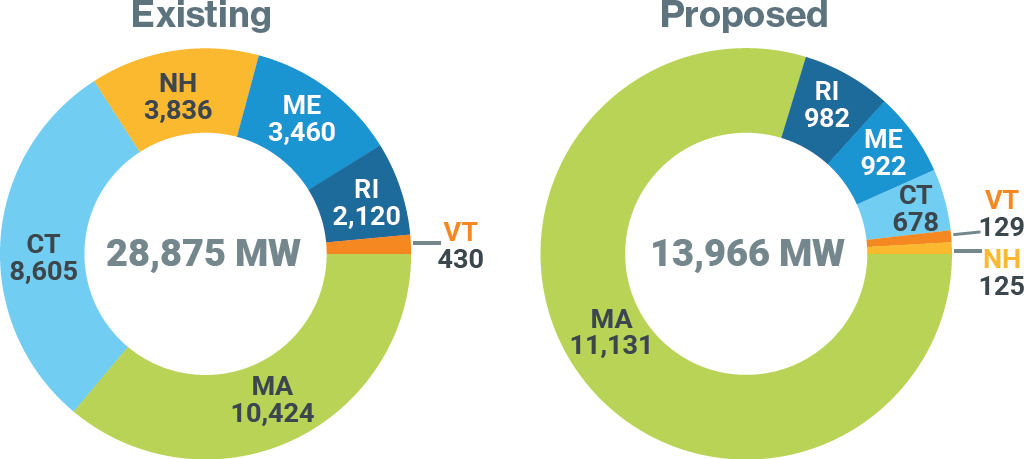
Source: ISO-NE 2025 Capacity, Energy, Loads, and Transmission Report; ISO-NE Generator Interconnection Queue, January 2026
Proposed Generation (by type)
Battery storage, wind, and solar dominate new resource proposals in the ISO queue (as of January 2026); Total: 13,966 MW
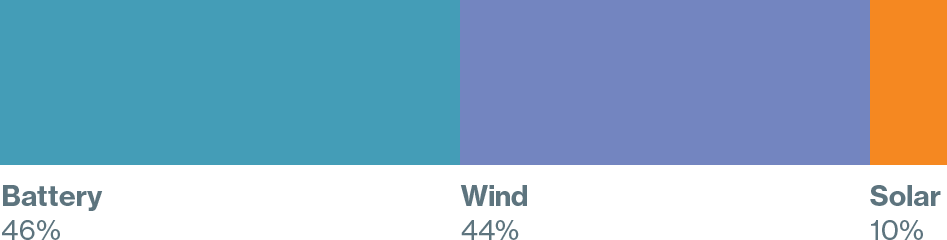
Queue data represents possible future additions to the mix of power resources in New England; however, it is a dynamic database that can change from day to day as developers submit or withdraw interconnection requests or commence operation.

ISO NE is reforming the capacity market to
reflect region's changing resource mix
To better ensure power system reliability and costefficiency as New England’s grid evolves, ISO New England is redesigning the capacity market, proposing a prompt auction with seasonal commitment periods paired with accreditation reforms to better reflect each resource’s contributions to resource adequacy.
ISO’s Electrification Forecast Shows Demand Growth
Compound annual growth rates for peak demand and overall electricity use, net of energy efficiency and solar photovoltaics (PV), 2025–2034
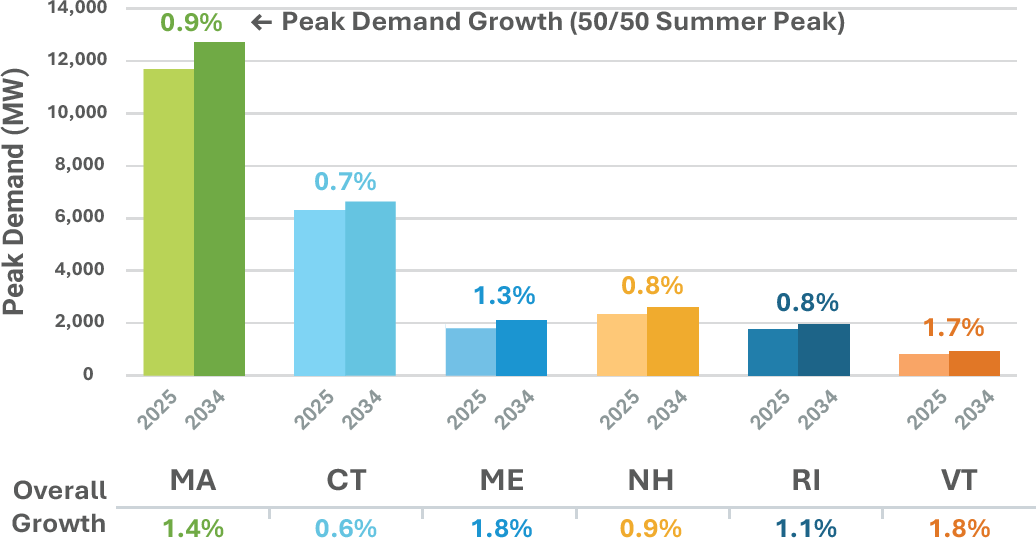
Source: ISO-NE 2025 Forecast Data and 2025 Capacity, Energy, Loads, and Transmission Report


State policies are driving changes in electricity demand
State-sponsored energy-efficiency and behindthe- meter solar PV resources have reduced overall electricity demand in New England. However, the ISO forecasts that both energy usage and peak demand will increase over the next 10 years. Electrification of transportation and buildings are the primary factors for this increase.

The states are active in procuring clean energy
From 2015 to 2025, Connecticut, Maine, Massachusetts, and Rhode Island issued dozens of energy solicitations, procuring thousands of megawatts of wind, solar, hydro, energy storage, nuclear and other clean energy resources. This is driving proposals in the ISO queue.
Demand Resources Compete in the New England Markets
New England’s wholesale electricity markets provide opportunities for participants to reduce their consumption in response to dispatch instructions from ISO.
In 2024, demand response provided 408 MW of capacity and 10 GWh of annual energy reductions.
State Policies Support Clean Energy and Drive Emissions Reductions
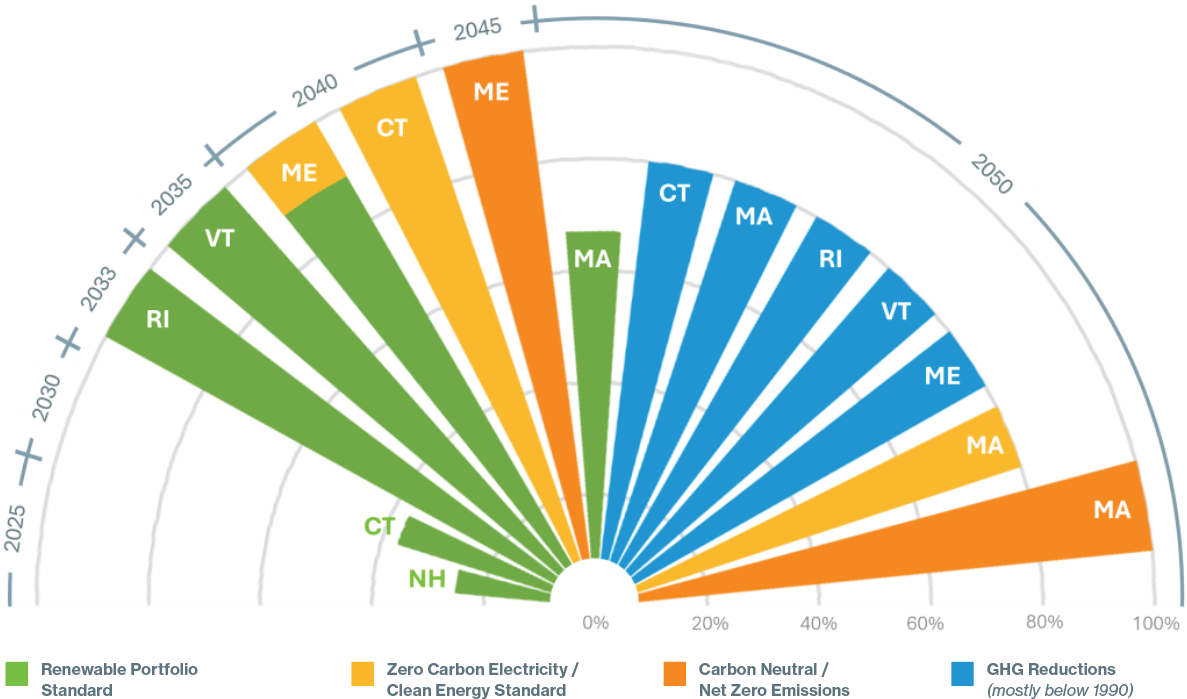
Source: Berkley Lab, State Electricity Resource Standards, “RPS & CES Targets and Demand” (August 2025); relevant state statutes and regulations.

All six New England states have renewable energy standards
Electricity suppliers are required to provide customers with increasing percentages of renewable energy to meet state requirements.

New England states promote behind-the-meter solar PV
ISO-NE reduces the level of capacity to be procured in the capacity market to account for state policies promoting behind-the-meter solar PV.

ISO-NE’s annual 10-year forecast is a foundational resource for system planning and reliability studies
Load forecasters at the ISO examine expected economic growth, historical weather patterns, projected adoption of technology like distributed solar PV, electric vehicles, and air-source heat pumps, and state-level carbon reduction goals to develop the 10-year forecast.
ISO-NE Forecasts Strong Growth of Solar PV Resources
Values are alternating current (AC) nameplate capacity (MW)
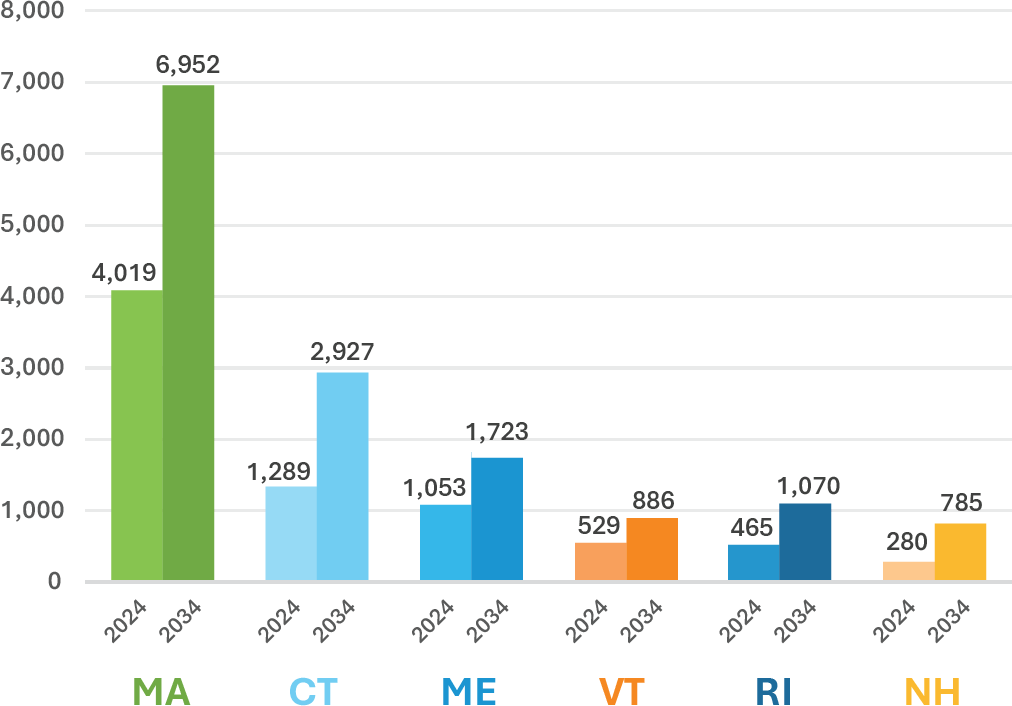
Source: 2025 Capacity, Energy, Loads, and Transmission Report
See also: New England Power Grid Regional Profile