
CELT Report
As a foundational resource for the region’s long-term electricity outlook, the ISO’s annual Forecast Report of Capacity, Energy, Loads, and Transmission (CELT Report) looks up to 20 years ahead to see how New England’s demand for energy might change. Understanding potential change helps plan how much transmission infrastructure our region will need in the coming decades, and how many generating resources the region must secure to meet demand.
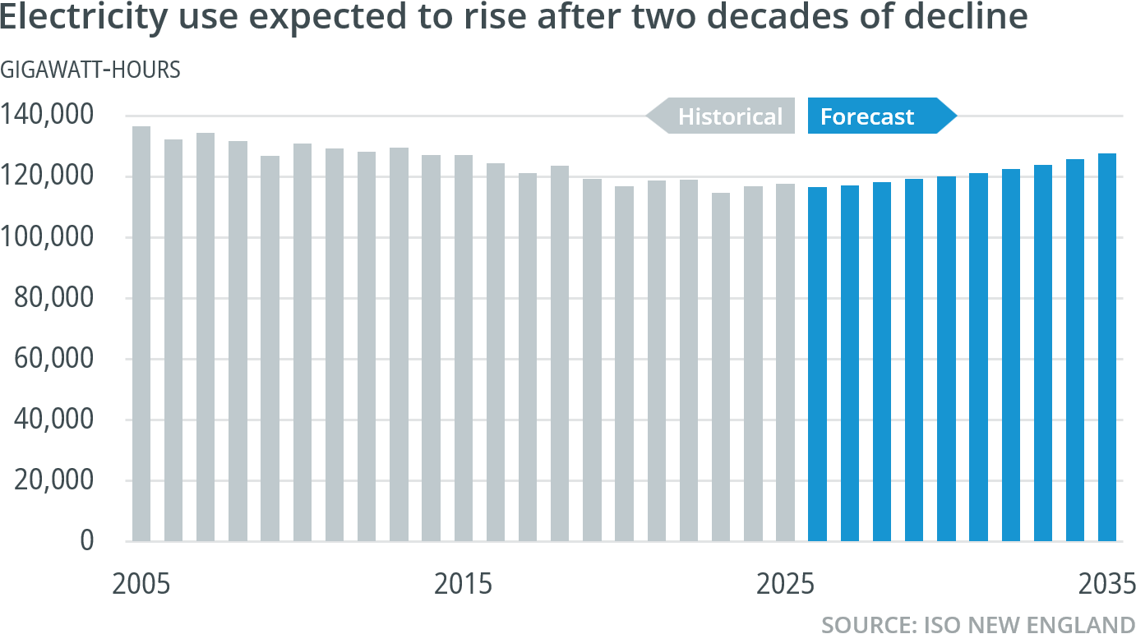
Net annual energy use in New England grew steadily between 1995 and 2005, driven primarily by economic growth and the use of air conditioning. Since 2005, net annual energy use has trended downward mainly due to an increase in energy efficiency from advanced cooling and heating technologies, energy-efficient appliances and lighting, and the increased prevalence of behind-the-meter solar generation. However, ISO New England is predicting this trend of declining use will reverse in the next decade. The CELT forecast shows steady growth in net annual energy use as state policy goals for reduced carbon emissions drive the electrification of heating systems and transportation in the region.
Seasonal Changes in the Decades Ahead
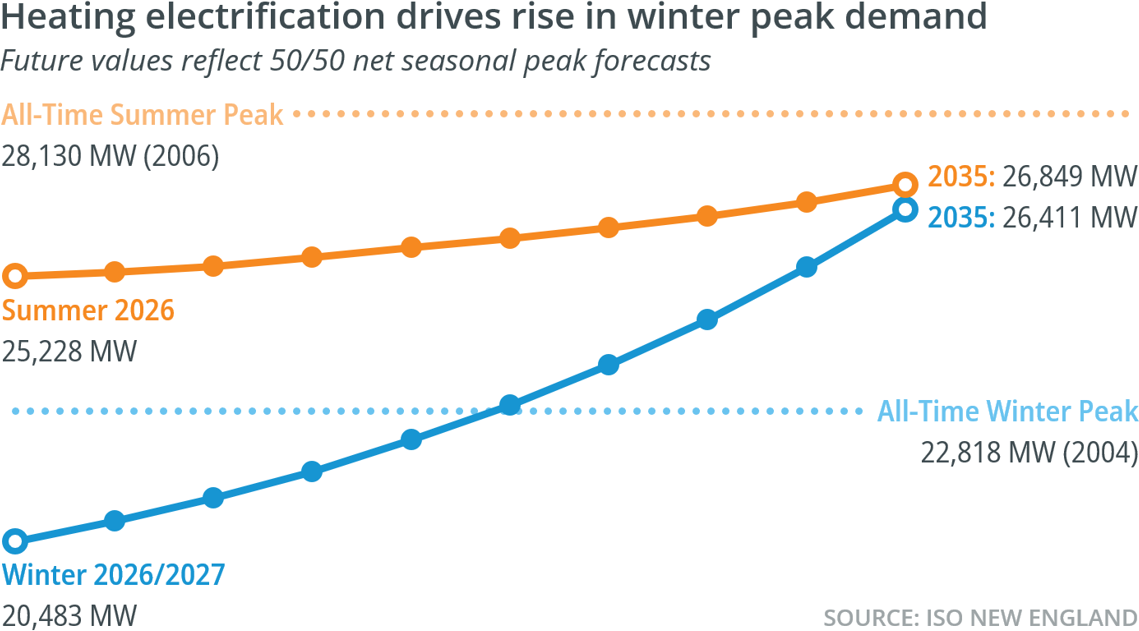
The current CELT projects an increase of 9% in annual electric energy use on the New England grid between 2026 and 2035. The region will require additional energy production to meet this growth. State policy goals will also affect the seasonality of net peak demand — the highest amount of electricity demand our resource fleet and transmission system must meet at the same time.
Over the last three decades, New England’s peak electricity use has always been in the summer, because more electricity is used for cooling than for heating. But heating electrification is expected to turn the regional grid back into a winter-peaking system sometime in the 2030s.
Our Responsive, Adaptive Forecasting
The ISO’s innovative load forecasters continually refine their methods to properly capture emerging trends. The CELT forecast relies on a comprehensive set of assumptions about New England, including economic data and adoption rates of behind-the-meter solar, electric vehicles, and electric heat pumps. The base demand forecast is broken down into eight zones, a smaller subset of New England’s six states. Projections related to distributed energy resources, heat pumps, and electric vehicles are generated for each of the region’s 67 counties.
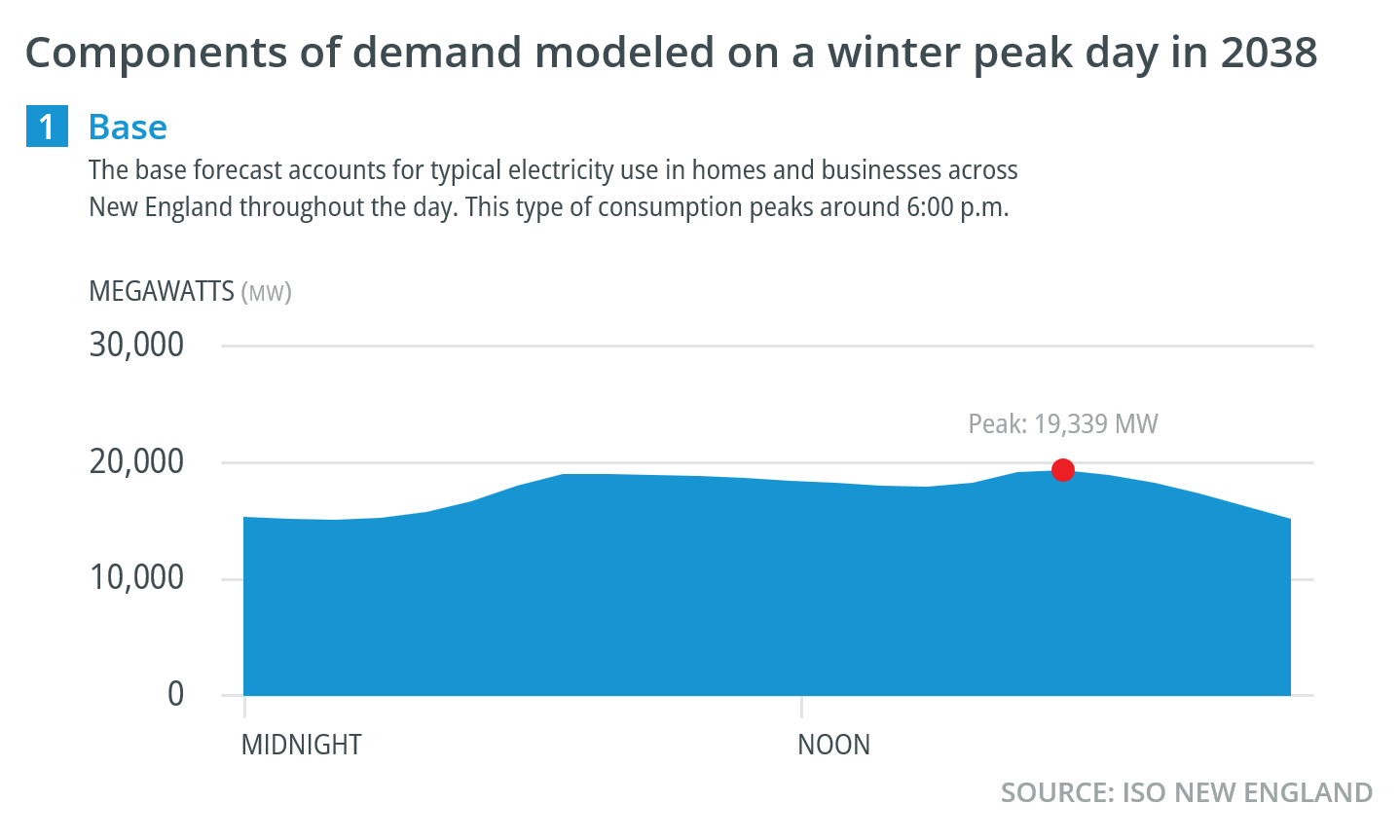
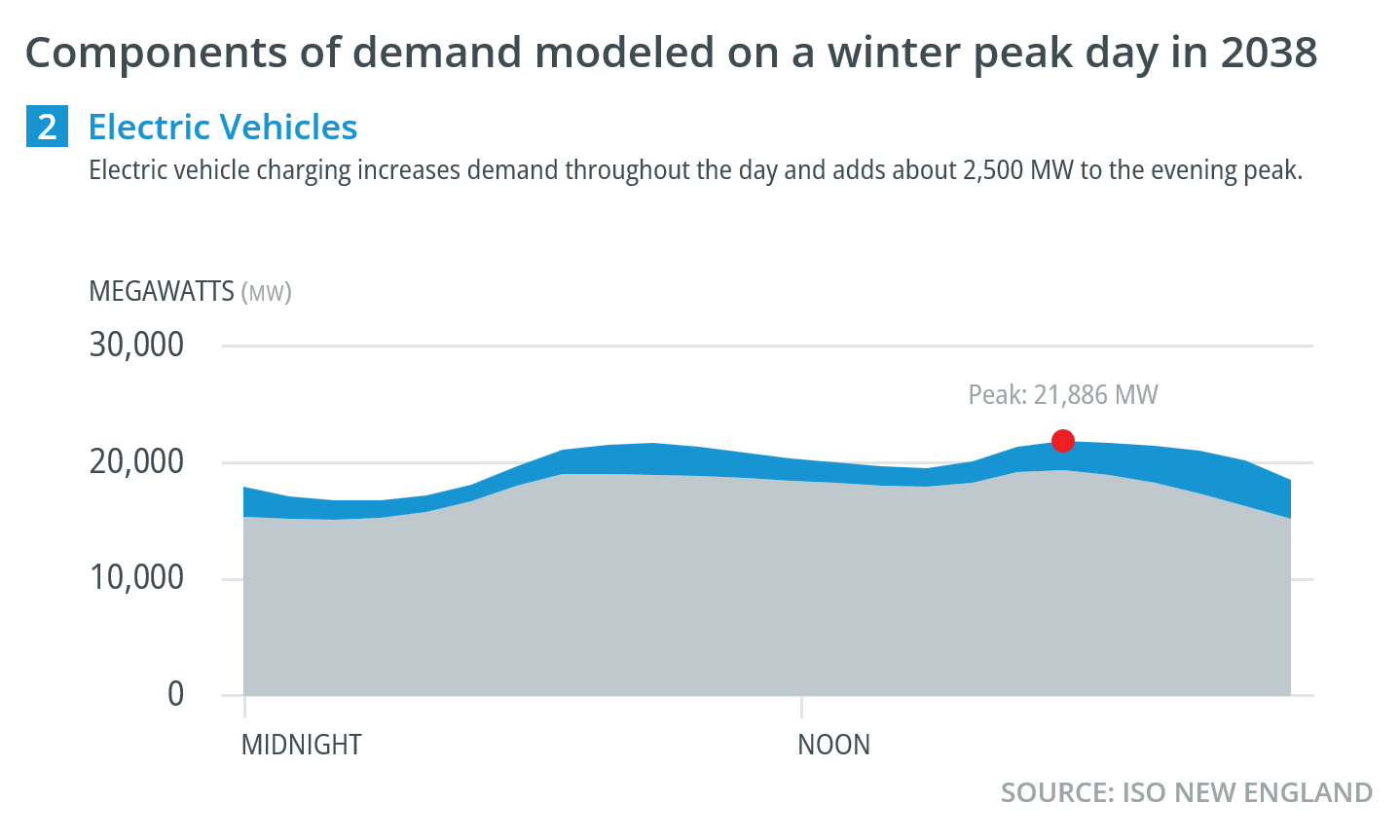
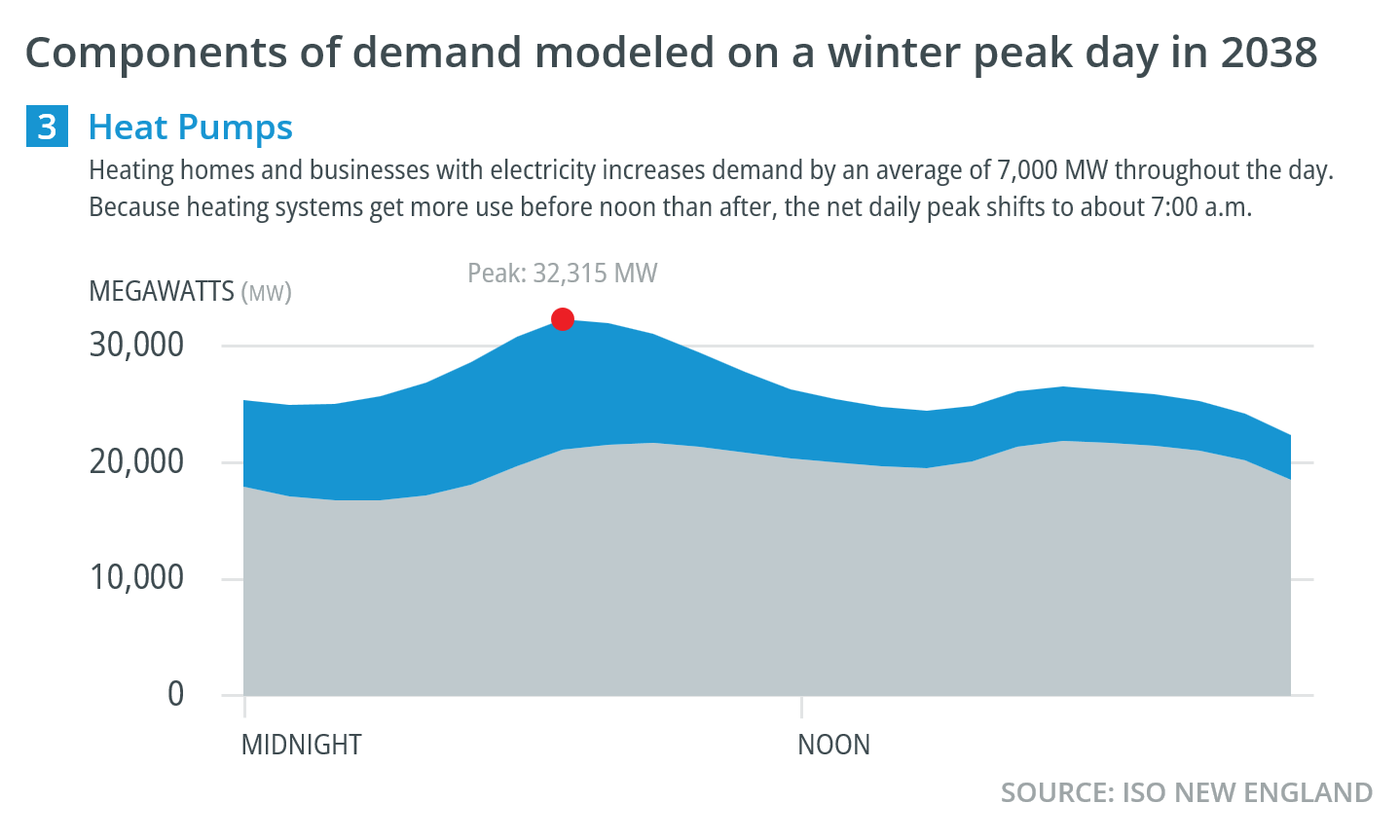
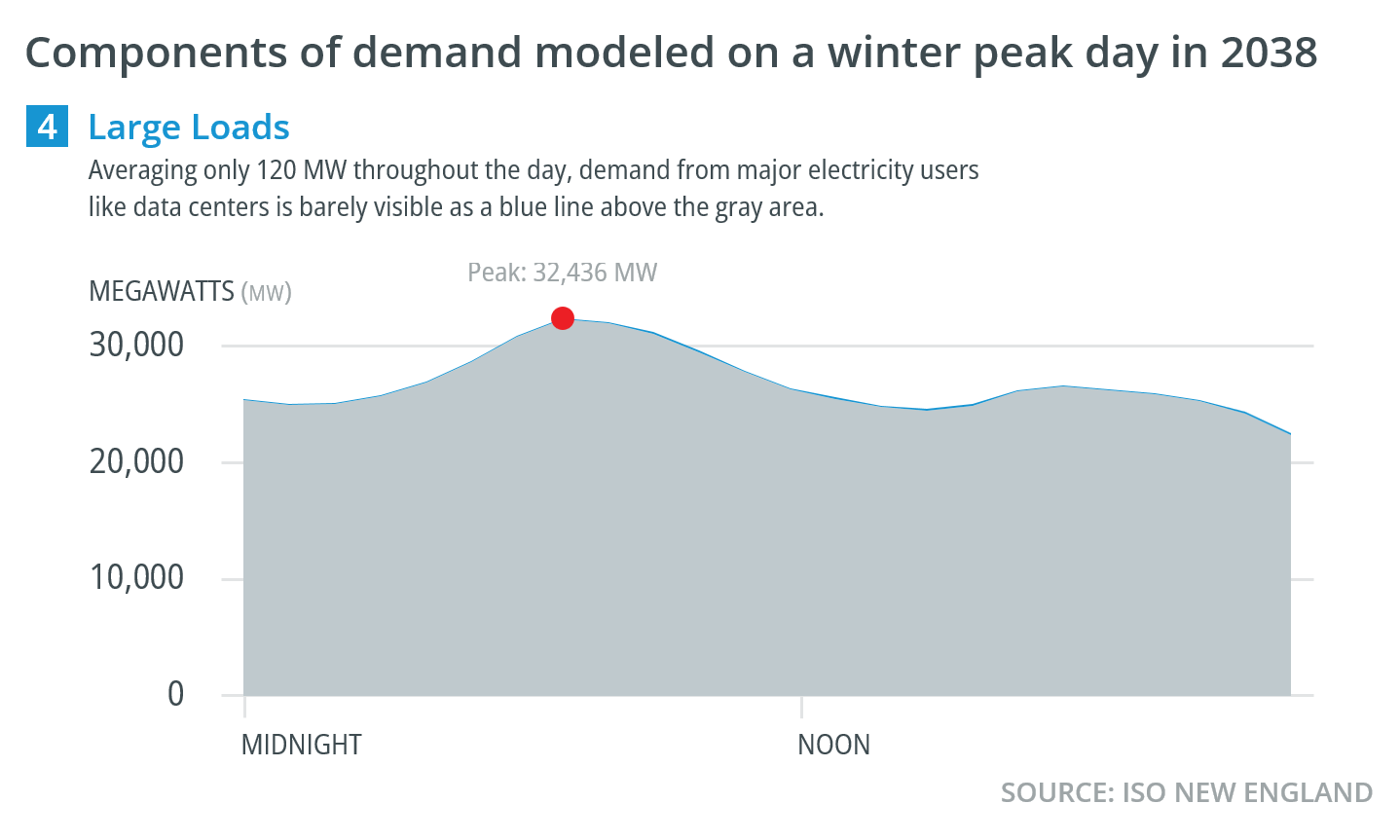
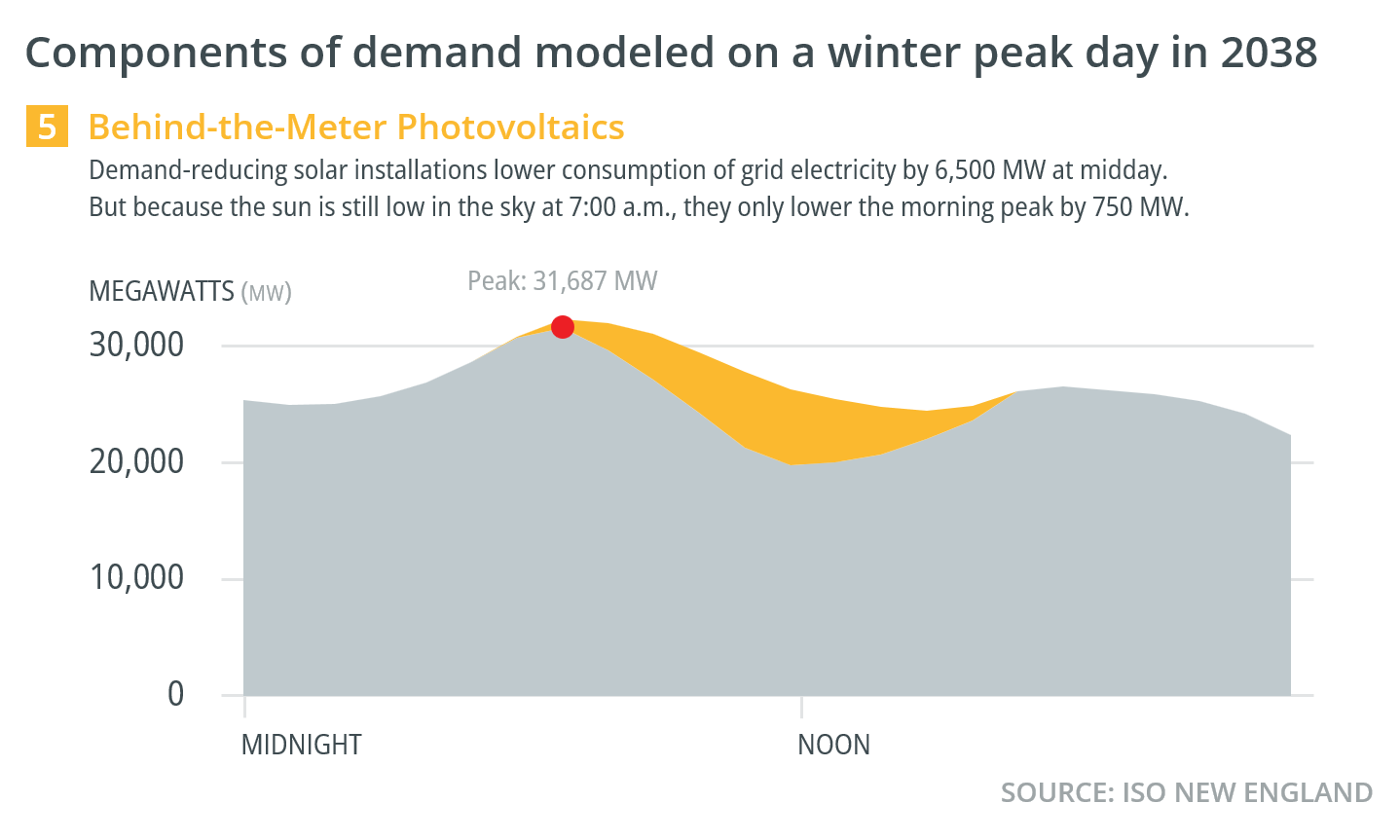
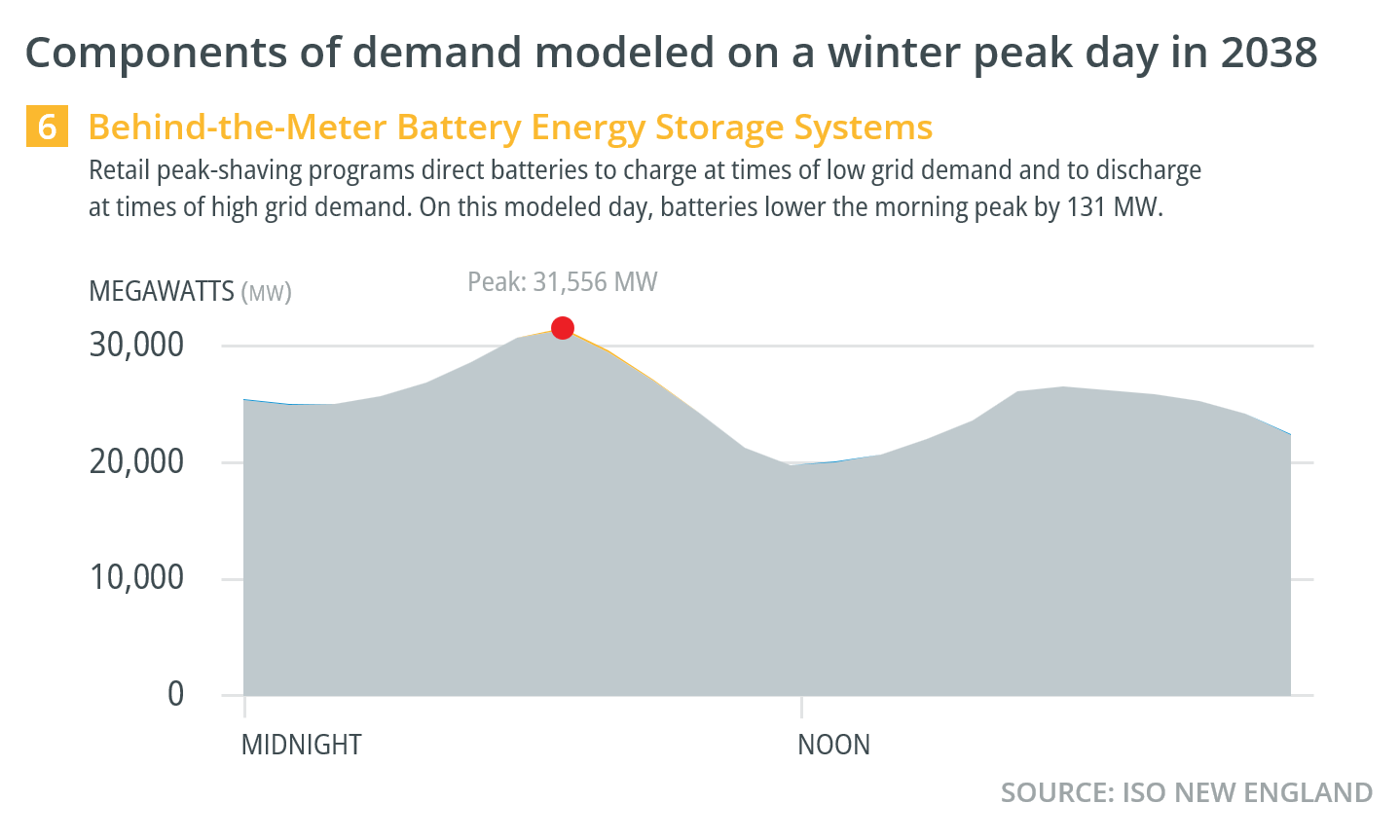

Recent improvements in forecast methodology have revised the region’s heat pump and behind-the-meter solar forecasts downward from previous years’ projections due to slower-than-expected adoption rates. The ISO has also recently developed modeling strategies for the addition of large loads like data centers. Although New England has not yet seen the same growth in data centers as other regions of the United States, and forecasting such loads is challenging, the ISO is well-prepared to account for such growth if this trend changes. And the forecast now takes an hourly approach to projections, rather than annual, to give a higher-resolution view of our region’s electricity needs. This detailed information will help inform the region’s need for resources to meet future demand.
These improvements in methodology allow us to stay ahead of the changes in demand the region might see in the coming decades, provide insights to inform future transmission system needs, and to identify the resources best suited to support cost-effective reliability.