
Economic Studies
Though we can’t know exactly what the grid will look like in the coming decades, we can gain key insights by examining how the power system might evolve under different economic circumstances, public policy choices, technological developments, and other factors. ISO New England’s economic studies complement the CELT Report by exploring what resources the region might need in the future, giving us an idea of how small and large changes to our current trajectory may affect the power system between now and 2050.
Economic studies use sophisticated modeling techniques to generate possible future timelines for the grid, simulating what kinds of resources would be most cost-effective to build, in what amounts, and when. Possible candidates for the build-out include existing technologies, like combined-cycle natural gas, and newer technologies not part of the current New England grid, like long-duration energy storage and small modular nuclear reactors.
Exploring Paths to Decarbonization
The primary case modeled in the economic studies develops a resource mix designed to meet the New England states’ carbon emissions policy goals. Collectively, the states aim to reduce emissions by 80% from 1990 levels by 2050. While the ISO does not decide what resources are built in New England, our models provide key information to the states and other decision-makers about cost-effective regional investments that could help meet policy targets.
Besides the state emissions goals, we also model other variables — less stringent emissions levels, lower-than-forecasted electricity demand, a more limited set of technologies to choose from, for example — to project how the grid might evolve over the coming decades. In each study cycle, stakeholders are given the opportunity to request different cases for the ISO to model. By illuminating a broad range of pathways, we can better identify trends that will shape the 2050 grid.
Each of the circles in the chart below represents a scenario explored in recent ISO-NE economic studies. Hover over a circle to see how the scenario would influence costs and the system capacity required to meet the region’s energy needs. Unless otherwise stated, all scenarios achieve the states’ 2050 emissions goals.
Hover over a bubble to view the scenario and update the 2050 generation mix.
less unused
renewable energy
more unused
renewable energy
renewable energy
renewable energy
The size of each circle is a measure of relative inefficiency. It shows the amount of unused electricity produced by wind and solar resources throughout the year 2050 — in other words, energy that is “left on the table” by a vast renewable build-out.
Seasonal “mismatches” drive this inefficiency. Wind and sunlight are most plentiful during spring and fall. But the grid needs this energy the most in summer and winter, when heating and cooling needs are highest. And storage technology, which might solve these mismatches, is not currently incentivized to store energy over multiple seasons.
Identifying Cost-Effective Strategies
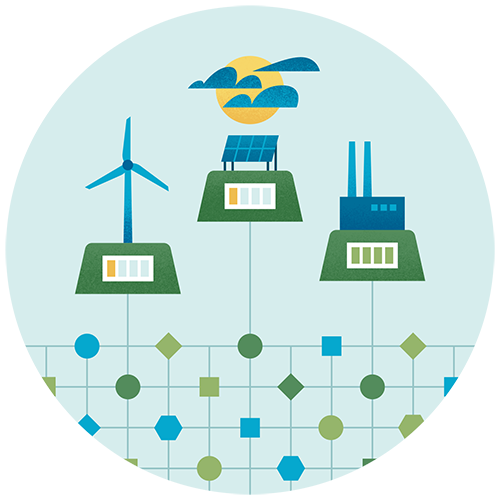
Trends in the most recent economic study show that the “final mile” of the states’ decarbonization efforts will drive the bulk of costs — but the region could achieve 85% of its emissions goals with a more modest build-out. Meanwhile, certain technologies and strategies are more cost-effective than others for reducing emissions. Small modular nuclear reactors and long-duration energy storage, for example, are zero-carbon resource types that support the region’s demand for electricity when wind and solar energy is less available, particularly in winter. Including them reduces the size of the 2050 resource buildout by over 15%.
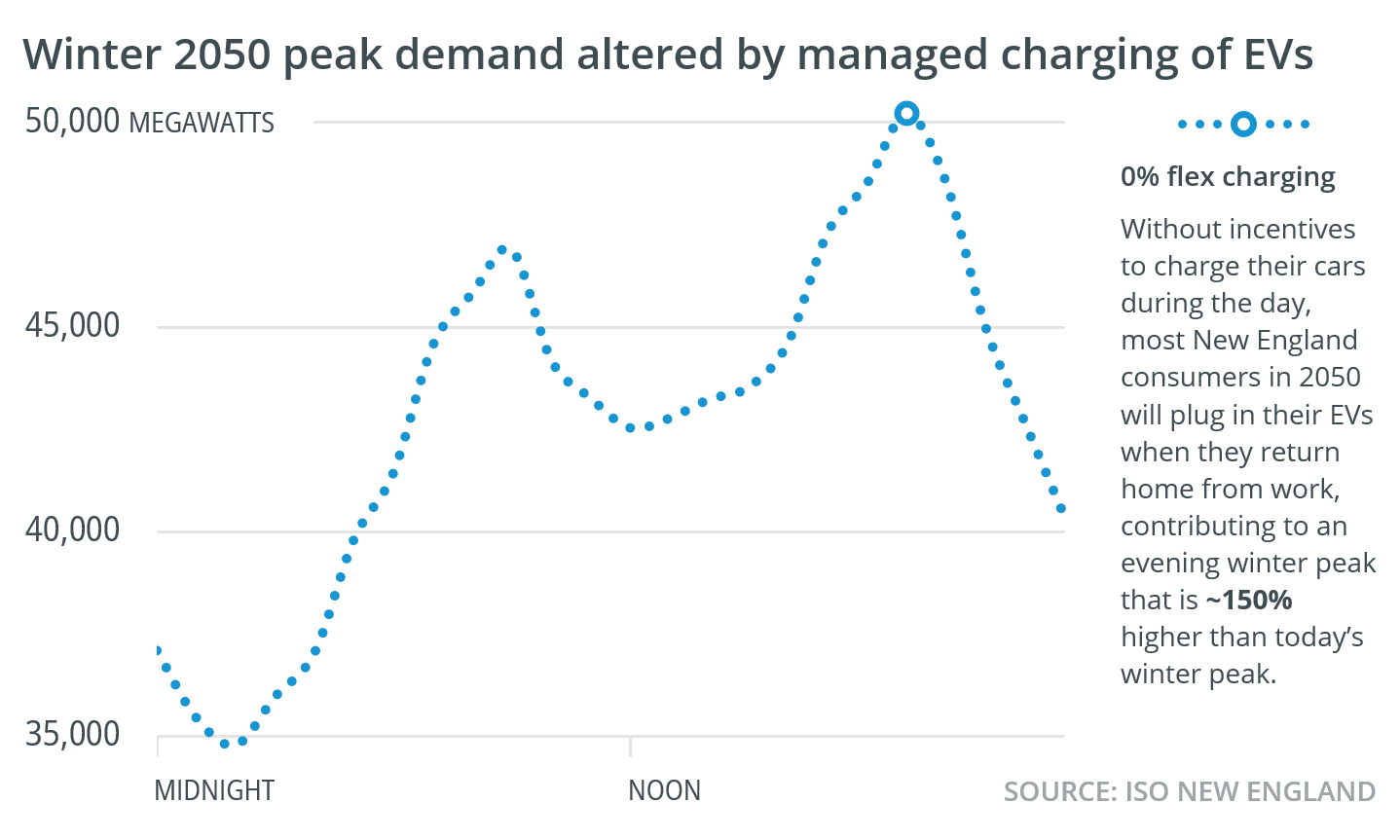
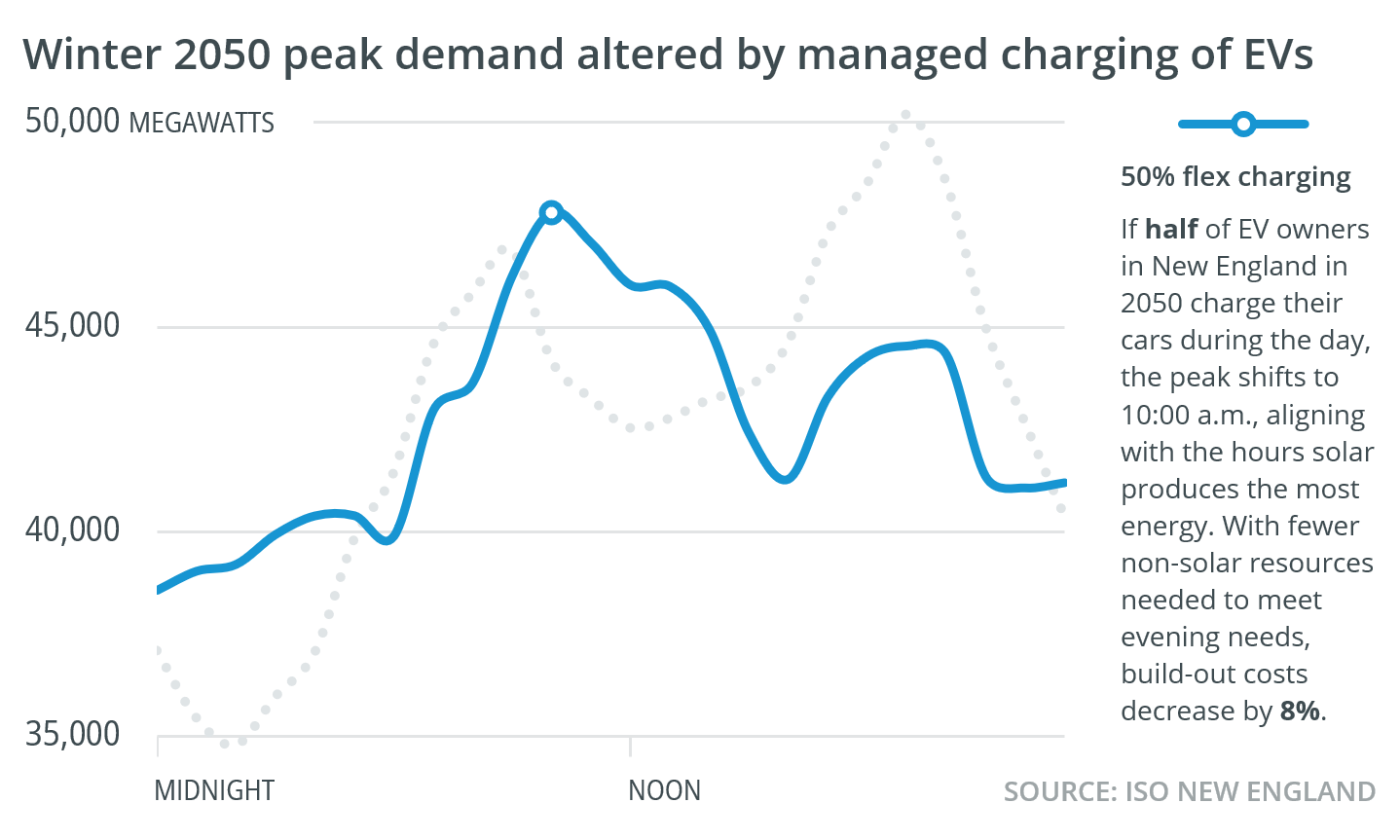
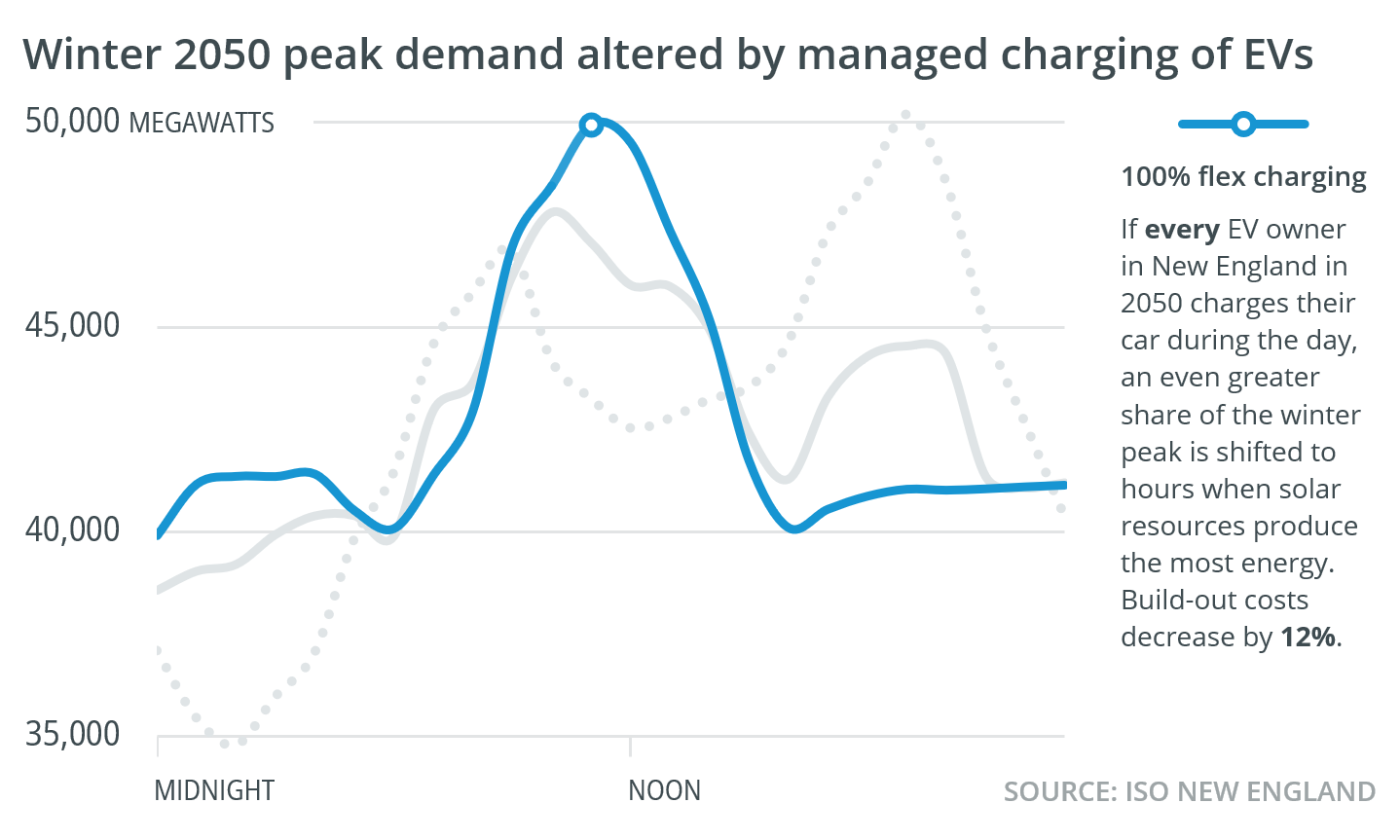
Strategies that shift the hours of some types of demand, such as electric vehicle charging, may also help reduce costs. By 2050, encouraging consumers to charge electric vehicles during the day instead of at night could take better advantage of daytime solar production, reduce generation build-out costs by up to 12%, and reduce potential transmission construction costs as well.
Though they are not a precise snapshot of the future, or a plan for what resources will be built, economic studies are a powerful way for regional decision-makers and industry representatives to explore various options for policy and development.